

Figure your depreciation deduction for the year you place the property in service by multiplying the depreciation for a full year by a fraction. The numerator of the depreciable assets fraction is the number of full months in the year that the property is in service plus ½ (or 0.5). You placed property in service during the last 3 months of the year, so you must first determine if you have to use the mid-quarter convention.

Sum-of-the-year’s-digits depreciation
Company A purchases a machine for $100,000 with an estimated salvage value of $20,000 and a useful life of 5 years. This FAQ is not included in the Internal Revenue Bulletin, and therefore may not be relied upon as legal authority. This means that the information cannot be used to support a legal argument in a court case. For more information about tax provisions under the OBBB, see One, Big, Beautiful Bill Provisions on IRS.gov. This is property that can be seen or touched, such as furniture and buildings.
Straight-Line vs. Accelerated Depreciation Techniques
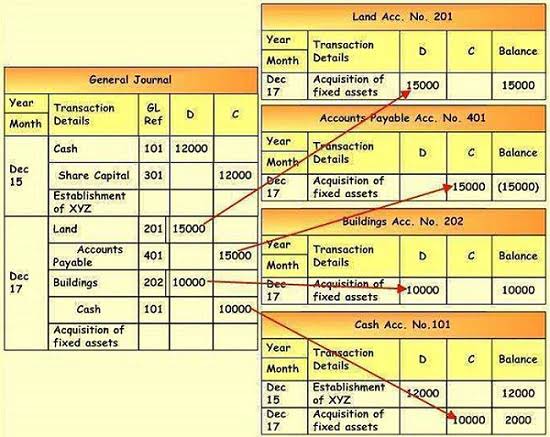
This is done by debiting the Accumulated Depreciation account and crediting the applicable Asset account. Asset accounts normally receive debits and maintain a positive balance, but the Accumulated Depreciation account receives credits. Class 56 captures automotive equipment that is not designed for use on highways or streets such as zero-emission aircraft, watercraft, trolley buses and railway locomotives.
- You make a $20,000 down payment on property and assume the seller’s mortgage of $120,000.
- This method, also called declining balance depreciation, allows you to write off more of an asset’s value right after you purchase it and less as time goes by.
- Business News Daily provides resources, advice and product reviews to drive business growth.
- This includes things like routine cleaning and maintenance expenses and repairs that keep the property in usable condition.
- Notably, depreciation is often considered a “non-cash expense” because it doesn’t reflect actual cash flows in the years following the initial purchase.
- Our editorial team independently evaluates products based on thousands of hours of research.
Straight Line Depreciation
If you buy and sell securities at various times in varying quantities and you can’t adequately identify the shares you sell, the basis of the securities you sell is the basis of the securities you acquired first. For more information about identifying securities you sell, see Stocks and Bonds under Basis of Investment Property in chapter 4 of Pub. You may also have to capitalize (add to basis) certain other costs related to buying or producing the property. For methods like MACRS, more calculation precision is required, considering factors such as conversion from personal to business use. To ensure the math checks out, it pays to use depreciation software or consult with a tax professional.
- After you have set up a GAA, you generally figure the MACRS depreciation for it by using the applicable depreciation method, recovery period, and convention for the property in the GAA.
- Under MACRS, Tara is allowed 4 months of depreciation for the short tax year that consists of 10 months.
- In this article, we will explore the process of calculating depreciation, its methods, and the implications it has for your investment.
- It’s a good idea to consult with your accountant before you decide which fees to lump in with the cost of your property.
- (Based on the half-year convention, you used only half a year of the recovery period in the first year.) You multiply the reduced adjusted basis ($800) by the result (22.22%).
A qualified joint interest is any interest in property held by married individuals as either of the following. The basis of the property you receive is generally the same as the basis of the property you give up. For more information about condemnations, see Involuntary Conversions in Pub. If you receive replacement property similar or related in service or use to the converted property, the replacement property’s basis is the old property’s basis on the date of the conversion. Figure the FMV of property you received without considering any restriction except one that by its terms will never end.
This is a simple way to depreciate the value of https://eacoffeemarketsandconference.com/2023/04/06/bookkeeping-vs-accounting-key-differences/ an asset based on how frequently the asset is used. “Units of production” can refer to something the equipment makes — like the number of pizzas that can be made in a pizza oven, or the number of hours that it’s in use. This method is good for businesses that want to write off equipment with a quantifiable and widely accepted (i.e., based on the manufacturer’s specifications) output during its useful life. Make sure you have a method in place for tracking your use of equipment, and expect to write off a different amount every year. However, its simplicity can also be a drawback, because the useful life calculation is largely based on guesswork or estimation.

An employer who allows an employee to use the employer’s property for personal purposes and charges the employee for the use is not regularly engaged in the business of leasing the property used by the employee. If you are not entitled to claim these expenses as an above-the-line deduction, you may not claim a deduction for the expense on your 2024 return. To figure depreciation on passenger automobiles in a GAA, apply the deduction limits discussed in chapter 5 under Do the Passenger Automobile Limits Apply. Under the simplified method, you figure the depreciation for a later 12-month year in the recovery period by multiplying the adjusted basis of your property at the beginning of the year by the applicable depreciation rate.
Real Property: Buildings and Land Improvements
However, if you Purchases Journal buy technical books, journals, or information services for use in your business that have a useful life of 1 year or less, you cannot depreciate them. If you use property for business or investment purposes and for personal purposes, you can deduct depreciation based only on the business or investment use. For example, you cannot deduct depreciation on a car used only for commuting, personal shopping trips, family vacations, driving children to and from school, or similar activities.

🎓 Unlock Core Accounting Skills for Financial Analysts!
Its main disadvantage is that it is difficult to apply to many real-life situations, as it is not always easy to estimate how many units an asset can produce before it reaches the end of its useful life. This means that assets will depreciate by the same amount each month. However, it will be expensed higher in the early years of its useful life. In contrast, the depreciation expense will be lower in the later years compared to the straight-line depreciation method. And… you need to recognise the value of your fixed assets and their depreciation over the years. And you can make your own by following our example of a depreciation schedule and using accounting software.